
Introduction
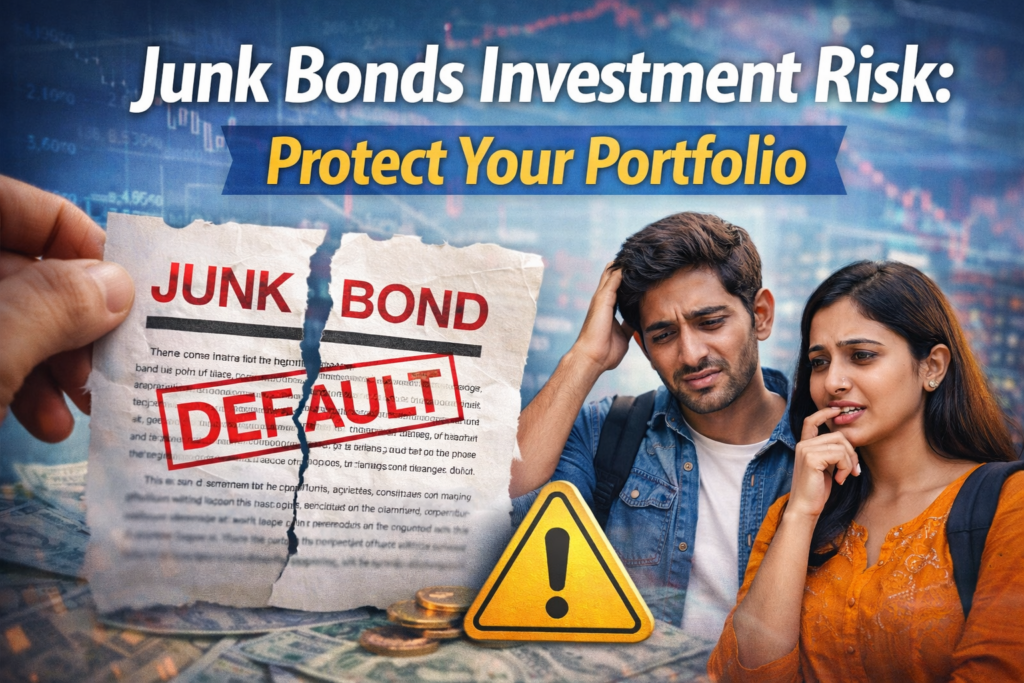
Junk Bonds Investment Risk: Investing is one of the most powerful ways to build wealth over time. However, not all investment opportunities are safe. Some promise high returns but come with equally high risks. One such category is junk bonds.
Junk bonds may look attractive because they offer higher interest rates compared to regular bonds. But before investing, it is important to understand the risks involved.
In this guide, we will explain what junk bonds are, why they can be risky, and how you can protect your investments like a professional investor.
What Are Junk Bonds?
Junk bonds, also known as high-yield bonds, are bonds issued by companies with lower credit ratings. Credit rating agencies evaluate companies based on their financial strength and ability to repay debt.
If a company has:
-
Weak financial health
-
High existing debt
-
Unstable revenue
-
Poor repayment history
Its bonds are rated below investment grade. These are called junk bonds.
Because they carry higher risk, they offer higher interest rates to attract investors.
Why Do Companies Issue Junk Bonds?
Companies may issue junk bonds when:
-
They cannot qualify for low-interest loans
-
They are financially unstable
-
They are new or expanding aggressively
-
They are restructuring operations
For such companies, offering higher interest is a way to attract funding.
Why Do Investors Buy Junk Bonds?
Despite the risk, some investors choose junk bonds because
-
They offer higher returns than government bonds
-
They may perform well during strong economic periods
-
They can diversify a portfolio
However, high return always comes with high risk.
The Real Risks of Junk Bonds
Before investing, it is important to understand the dangers.
1. Default Risk
The biggest risk is default. If the company fails financially, it may not repay interest or principal.
2. Economic Sensitivity
Junk bonds are highly sensitive to economic downturns. During recession periods, weaker companies struggle more.
3. Market Volatility
Their prices fluctuate significantly compared to safer bonds.
4. Liquidity Risk
Some junk bonds are difficult to sell quickly without price loss.
How Credit Ratings Work
Credit rating agencies such as Moody’s, S&P, and Fitch assign ratings.
Investment-grade bonds usually have ratings like the following:
-
AAA
-
AA
-
A
-
BBB
Junk bonds fall below the BBB rating.
Before investing, always check the bond’s credit rating.
How to Protect Your Investments
Professional investors follow disciplined strategies. Here’s how you can do the same.
1. Do Proper Research
Never invest in high-yield bonds without understanding:
-
Company financial reports
-
Debt levels
-
Business model
-
Industry stability
Knowledge reduces risk.
2. Diversify Your Portfolio
Avoid putting all money in one high-risk bond.
Diversification means spreading investments across:
-
Government bonds
-
Corporate bonds
-
Equity
-
Mutual funds
-
Fixed deposits
This reduces overall portfolio risk.
3. Limit Exposure to High-Risk Bonds
If you want to invest in junk bonds, allocate only a small percentage of your portfolio.
Professional investors usually limit high-risk assets.
4. Consider Bond Mutual Funds
Instead of buying individual junk bonds, consider:
-
High-yield bond funds
-
Debt mutual funds
These funds spread risk across multiple companies.
5. Monitor Economic Conditions
High-yield bonds perform better in strong economic environments.
During economic uncertainty, it may be safer to shift toward lower-risk investments.
6. Avoid Chasing High Returns Blindly
Many investors get attracted to double-digit interest rates.
Always ask:
-
Why is this return so high?
-
What is the company’s financial condition?
-
What happens if the company defaults?
Higher return often signals higher risk.
Warning Signs of Risky Bonds
Be cautious if you notice the following:
-
Company with declining profits
-
Excessive borrowing
-
Lack of transparency
-
Aggressive marketing promises
-
Very high returns compared to market average
These may indicate elevated risk.
Junk Bonds vs Investment-Grade Bonds
| Feature | Junk Bonds | Investment-Grade Bonds |
|---|---|---|
| Risk Level | High | Low to Moderate |
| Interest Rate | High | Moderate |
| Default Risk | Higher | Lower |
| Suitable For | Experienced investors | Conservative investors |
Understanding the difference helps you make informed decisions.
Are Junk Bonds Always Bad?
Not necessarily.
Some experienced investors use junk bonds strategically for:
-
Income generation
-
Portfolio diversification
-
Short-term opportunities
However, they carefully evaluate risk and allocate limited capital.
For beginners, safer instruments may be more suitable.
Safer Alternatives to Consider
If your priority is safety, consider:
-
Government bonds
-
Public Provident Fund (PPF)
-
Fixed deposits
-
High-rated corporate bonds
-
Balanced mutual funds
These options generally carry lower risk.
Importance of Risk Tolerance
Before investing in any bond, assess your:
-
Financial goals
-
Income stability
-
Emergency fund
-
Risk tolerance
-
Investment horizon
High-risk bonds are not suitable for investors who cannot handle volatility.
Junk Bonds Investment Risk: Long-Term Investment Mindset
Professional investors focus on:
-
Long-term growth
-
Risk-adjusted returns
-
Consistent strategy
They avoid emotional decisions based on short-term market movements.
Adopting a disciplined approach improves financial outcomes.
When to Avoid Junk Bonds
You should avoid junk bonds if:
-
You are close to retirement
-
You depend on stable income
-
You lack emergency savings
-
You do not understand bond markets
Safety should always match your financial situation.
Final Thoughts
Junk bonds can offer higher returns, but they carry higher risk. Understanding credit ratings, company fundamentals, and economic conditions is essential before investing.
Smart investors do not chase returns blindly. They focus on balanced portfolios, diversification, and risk management.
If you are unsure about high-yield bonds, consult a certified financial advisor before making investment decisions.
Remember, protecting your capital is more important than chasing high returns.
Invest wisely, stay informed, and build wealth safely.
Junk Bonds Investment Risk Disclaimer
This article is for educational purposes only and does not constitute financial advice. Investment decisions should be made after consulting a qualified financial professional.
-
Reserve Bank of India – https://www.rbi.org.in
-
SEBI Investor Education – https://www.sebi.gov.in
-
NSE Bond Market – https://www.nseindia.com
-
Investopedia (Junk Bonds Guide) – https://www.investopedia.com/terms/j/junkbond.asp



Well written and useful.
Really enjoyed this!
Very helpful post.
Smart work explained perfectly.
This article really highlights the importance of smart risk management. Great job!
Superb! You balanced risk awareness with practical steps to stay safe—great for long-term investors.
Great article! Every investor—beginner or expert—needs to understand the dangers of high-yield junk bonds.